
Media Presence Is Not a Gift. It Is a Skill.
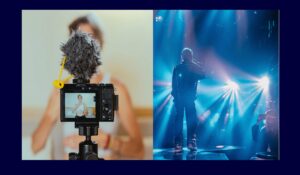
It is better to prepare than repair.
Most professionals treat media moments as either going well or going badly. They prepare loosely, rely on expertise to carry them, and hope the moderator asks the right questions. Then they ask why the clip didn’t land.
The difference between a strong media appearance and a forgettable one is not charisma. It is architecture. Message architecture, physical architecture, narrative architecture. And like any structure, it has to be built before you need it.
Whether you are an executive stepping in front of a boardroom camera for a CEO roundtable or a content creator building an audience one video at a time, the principles are the same. Presence is not performed. It is prepared. ⸻
What does “media-ready” actually mean?

Before any appearance, you need three anchors: the three points you will land, no matter what direction the conversation takes. Anchors in the structural sense. These are the ideas you will return to, build from, and leave the audience holding when the segment ends. Most professionals walk into interviews with ten things they want to say. They leave, having said none of them clearly.
Message architecture starts with subtraction, not accumulation. Decide what you will not say, and you immediately sharpen what you will.
Why is preparation different from memorization?
Memorization creates brittleness. When a question lands differently than expected, a memorized answer collapses. Message architecture creates flexibility. You know the destination, so any road gets you there.
Think of it as knowing your chords before the session starts. You do not script the performance. You internalize the structure deeply enough that improvisation stays coherent. This distinction matters especially for executives. The instinct is to prepare for the likely questions. The skill is to internalize your anchors well enough that unlikely questions do not derail you.
How do you control a narrative without sounding defensive?
Two tools. Bridging and flagging:
- Bridging is the art of acknowledging a question and redirecting to your anchor. It is not evasion. It is navigation. The journalist sets the agenda. You own the narrative. A bridge sounds like: “That is worth addressing, and what I think is most important for your audience to understand is…” You have acknowledged the question. You have not surrendered your message.
- Flagging is the signal you send when you are about to say something you want remembered. “The one thing I want to be clear about…” or “If there is one takeaway from this conversation…” These phrases tell both the journalist and the audience that what follows is the headline. Use them sparingly. When every sentence is flagged, nothing is.
Narrative control is not about being evasive. It is about being intentional. There is a difference.
What is the soundbite, and why does it still matter?
- A soundbite is not a marketing slogan. It is the atomic unit of media communication. In broadcasting, producers are cutting for 10 to 20 seconds of usable audio. In digital, algorithms surface the moment, not the full interview. In both cases, if you cannot compress your point to roughly 45 words, you are leaving your message to the editor.
- A strong soundbite has three qualities: it is specific, vivid, and stands alone without context. The test is simple. If someone heard only that sentence, would they understand the idea? If the answer is no, it is not a soundbite yet. It is still a paragraph.
For content creators, this principle extends beyond interviews. The soundbite discipline translates directly to captions, titles, and hooks. A sentence that can stand alone in a feed is a sentence that travels.
IN PRACTICE

In 2001, Apple had a problem. They built a groundbreaking device that could hold thousands of songs, but how do you sell it? Companies were throwing around terms like “5GB storage capacity” and “revolutionary interface,” and guess what? No one cared.
Then Steve Jobs walked on stage and said six simple words:
“1,000 songs in your pocket.”
BOOM. That clear, powerful message changed everything. Apple didn’t change the product; they just changed the words. And they sold more iPods in a month than TVs sell in a year.
What worked:When Steve Jobs introduced the iPod in 2001, he did not lead with storage capacity or technical specifications. He said, “1,000 songs in your pocket.” Four words. That sentence traveled further than any spec sheet could. It was specific, vivid, and complete without context. It remains the benchmark example of a soundbite that earns its own distribution.
How is camera presence different from stage presence?
- On a stage, you are one element in a large environment. On a screen, you fill the frame entirely. Every movement is magnified. Every pause reads differently. The two contexts require different calibrations.
- On stage, energy expands outward. On camera, energy focuses inward toward the lens. Looking directly into the lens is the non-verbal equivalent of direct address. It creates the sensation of eye contact at scale. Most people look at the screen, at the interviewer window, or slightly off-axis. The viewer registers this immediately, even if they cannot explain it.
- The practical shift: treat the lens as the person you are talking to. Not the moderator. Not the live audience. The viewer is on the other side of the glass. When you make that mental shift, the physical adjustment follows naturally.
One mistake worth naming directly: movement that reads as energy in person reads as restlessness on camera. Ground yourself physically and let your voice carry the variation.
IN PRACTICE

What worked: The 1960 Kennedy-Nixon debate is the foundational case study in camera presence. Kennedy’s stillness, direct lens engagement, and physical composure under the frame left an impression that Nixon, who prepared for the argument rather than the frame, did not. Post-debate Gallup polling showed Kennedy winning the exchange 43% to 23%. Nixon performed for the room. The room was not the audience.
How do you respond when something goes wrong?
When an unexpected question lands, or when you are managing a difficult moment in a live setting, the structure I return to consistently is: Regret, Reason, Remedy.
- Regret first. Own it. Express genuine concern for what happened. You can say “I am sorry this occurred” without making a legal admission. What you are doing is establishing that you are a person first and a spokesperson second. Audiences forgive organizations that lead with humanity. They do not forgive organizations that lead with legal positioning.
- Reason second: Provide the facts available to you. Do not speculate. Do not fill silence with hedged guesses. If you do not know something, say so. Admitting ignorance builds more credibility than fabricating confidence.
- Remedy last. Detail what is being done and what will change. This is where you move the audience from concern to confidence, not by minimizing what happened, but by demonstrating that the organization understands its responsibility.
IN PRACTICE

WHAT WORKED
The 1982 Johnson & Johnson Tylenol crisis remains the benchmark in crisis communications. When tampered capsules caused deaths, the company led with the human cost, pulled 31 million bottles from shelves before regulators required it, and communicated the remedy before anyone demanded one. Regret, reason, remedy, in sequence, at speed. Market share recovered within a year.
WHAT DOES NOT WORK
United Airlines CEO Oscar Munoz’s initial statement following the 2017 forcible removal of a passenger described the incident as having to “re-accommodate” customers. Regret was absent. Remedy was not offered. Days later, Munoz issued a second statement that followed the correct sequence, but by then the first response had set the narrative, and the damage had compounded across 72 hours of global coverage.
What does a strong media appearance actually leave behind?
- One clear idea the audience did not have before they tuned in. Not ten insights. Not a comprehensive overview of your work. One idea, delivered with enough clarity and conviction that it survives the scroll, the edit, and the retelling.
- Media moments are earned, not guaranteed. The professionals who use them well understand that the goal is not to say everything. The goal is to make one thing unforgettable
- Preparation is not a luxury reserved for high-stakes appearances. It is the infrastructure underneath every appearance that does not look like work. That is what media training is actually for.
Build it before you need it.
The patterns are more universal than most people expect.
What is the one media moment you wish you had prepared differently? Drop it in the comments.
Cynthia Lieberman is the founder of LieberComm, a strategic communications consultancy at the intersection of brand trust, AI literacy, and media psychology. Follow her on LinkedIn and learn more at www.cynthialieberman.com
